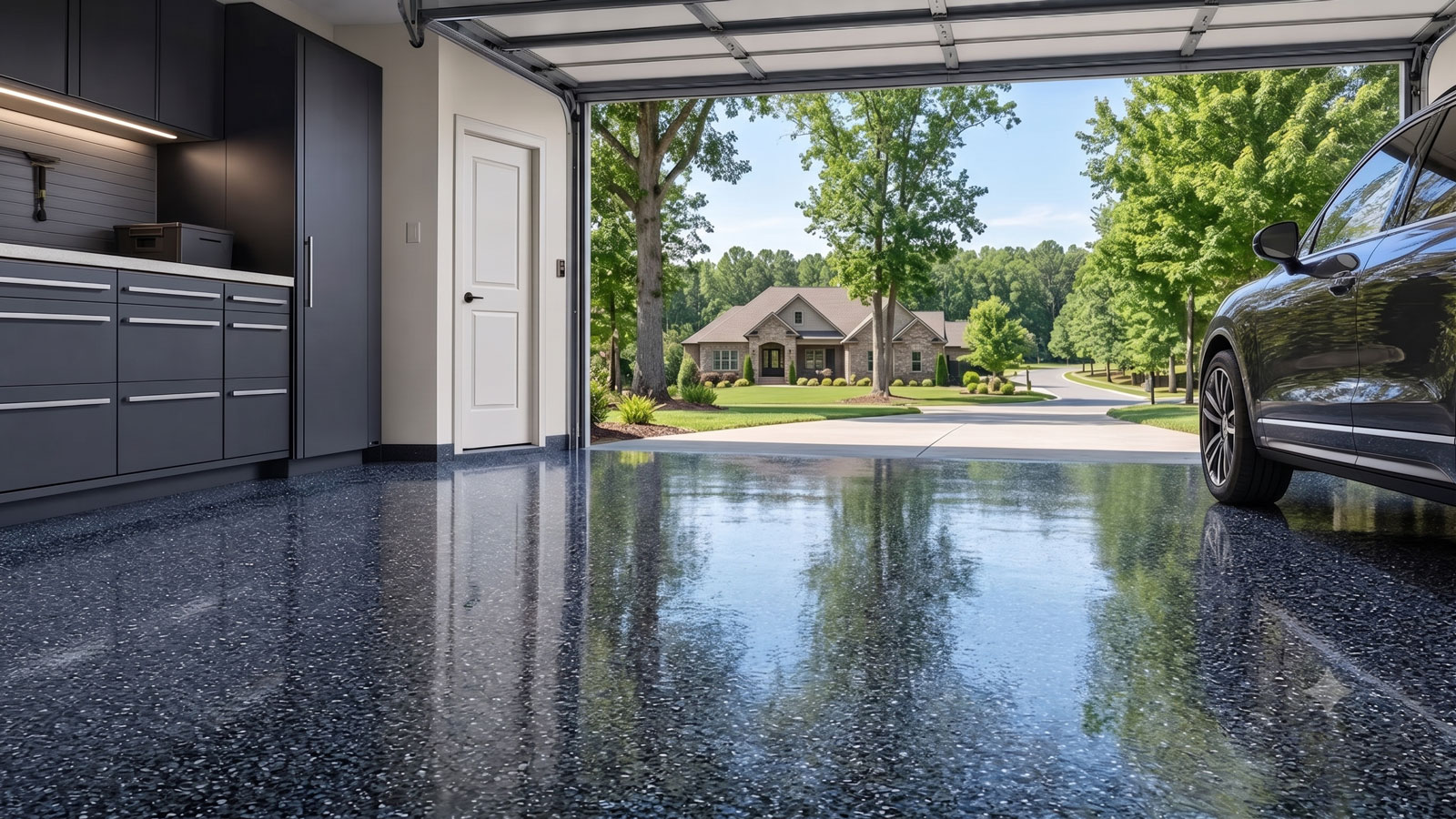
Garage Floor Coating in Westerville, OH
Floor Coating Services in Westerville, OH
Westerville combines an old village core with major postwar and post-1970 suburban growth. Population rose sharply through the 1970s and 1980s, while later development extended north toward Polaris and southern Delaware County. Uptown garages can contain paint, patches, later additions or repours, while newer north-side floors may be larger and younger but still carry builder treatments.
About 90 percent of Westerville drains toward Alum Creek, and more than 130 miles of storm sewer pipe serve the city. Some original Uptown storm sewers dating to the early 1900s remain in service. That is useful drainage context, but creek proximity or pipe age alone does not establish slab moisture.
The estimate should identify the actual surface history and actual water behavior at the garage. Old coatings, repairs and repours require different preparation from curing products and sealers on newer concrete, while threshold runoff or persistent dampness should be handled as a separate issue. That keeps older-infrastructure context useful without letting it replace direct observation of the garage and its concrete.
Local Market Insight
Westerville combines an old Uptown core with major post-1970 suburban growth, while most of the city drains toward Alum Creek and some early storm sewers remain in service. That mix makes both concrete age and property-level drainage important parts of the garage inspection.
What Affects the Cost of Garage Floor Coating in Westerville?
Westerville's Uptown core, post-1970 growth and newer north-side development create different surface histories. Old paint, additions and repairs may affect established garages; younger slabs may need builder treatments removed. Alum Creek drainage, older storm infrastructure, winter residue and garage layout should be evaluated separately.
Development-era slab history
Westerville's heritage reaches to 1809, with the old village platted in 1839 and major growth after World War II. Population rose from 12,530 in 1970 to 23,414 in 1980 and 32,269 by 1990, while later development spread north toward Polaris and southern Delaware County. The preparation should follow the actual slab generation rather than the age of the city name.
Creek, river, and stormwater context
About 90 percent of Westerville's surface area drains toward Alum Creek, with the remainder going toward Hoover Reservoir and Big Walnut Creek. The city maintains more than 130 miles of storm sewer pipe, and some original Uptown storm sewers dating to the early 1900s are still in service. Property-level drainage evidence matters more than broad proximity to a waterway.
Existing coatings and construction treatments
Floor paint, DIY epoxy, clear sealer, curing compound, adhesive, and builder residue can all interfere with adhesion and may require full mechanical removal.
Cracks, joints, and mixed pours
Stable cracks, control joints, repours, utility cuts, chipped edges, and additions should be evaluated before full-surface grinding so repairs match the concrete condition.
Four-season vehicle residue
Central Ohio freeze-thaw, salt, snowmelt, leaves, and spring storms create different maintenance inputs across old and new garage floors. during an on-site evaluation
Garage layout and return-to-service
Steps, stem walls, cabinets, storage alcoves, multiple bays, traction preference, and how quickly vehicles must return can change labor, materials, and system choice.
Call for a clear, project-specific estimate — or request one online.
Olde Westerville and the post-1970 growth wave represent different concrete generations
Westerville developed as an independent farming and college town before rapid suburban expansion changed its footprint. That makes older Uptown garage history very different from later subdivisions near the city's growth boundaries.
Uptown and Olde Westerville garages may have long histories of paint, patches, repours, and additions, while later northern development is more likely to have larger, younger attached slabs with builder treatments.
A Westerville estimate should identify concrete transitions, previous coatings, sealers, repairs, and control joints before assuming that either an old neighborhood or a newer subdivision tells the whole story.
Alum Creek and century-old storm infrastructure give drainage a specific local context
Most of the city drains toward Alum Creek, while some Uptown storm pipes have served the road system since the early 1900s. For a homeowner, that makes actual inlet condition, driveway slope, and threshold water more useful than generic claims about rain.
Because so much of Westerville drains toward Alum Creek and some original Uptown storm infrastructure is still in use, homeowners should pay attention to driveway pitch, ponding, downspouts, and actual threshold water.
A dry garage can proceed as a normal preparation-and-finish project. Recurring runoff or dampness should be diagnosed separately rather than hidden under a coating. For Westerville homeowners, the 90-percent drainage relationship to Alum Creek is useful background, but it does not tell you whether a specific garage is wet. A century-old storm line nearby may never affect the floor, while a sloped driveway elsewhere can send rain directly to the door. The coating estimate should therefore pair surface-history clues—paint, repours, patches and sealers—with actual observations of water at the property. Westerville's older Uptown infrastructure and broad Alum Creek drainage pattern are useful context, but they should lead to better questions rather than a blanket moisture assumption. A homeowner should look for actual threshold entry, damp edges and previous coating failure while also checking whether paint, patches, repours or builder treatments need removal from the slab.
Before coating a Westerville garage
- Does the slab appear original, added later, or made from multiple concrete pours?
- Is paint, sealer, curing compound, adhesive, or an old coating present?
- Are cracks, patches, pitting, chipped edges, or utility cuts visible?
- Does the driveway or surrounding grade send rain or snowmelt toward the door?
- Are water marks, mineral deposits, slow-drying areas, or previous coating failures present?
- Where do road salt, grit, wet tires, and seasonal debris normally collect?
- Is the garage primarily parking, household entry, storage, workshop, recreation, or mixed use?
Westerville Garage Floor Coating FAQs
How do Uptown Westerville garages differ from newer north-side garages?
Older garages are more likely to have paint, patches, additions, or repours, while newer garages more often have sealers, curing compounds, smooth finishes, and builder repairs.
Does Alum Creek drainage mean every Westerville garage has a moisture issue?
No. The watershed is local context. Actual water entry, ponding, efflorescence, slow drying, or prior coating failure are the property-level signs that matter.
What should be checked in an older Westerville garage?
Look for coating layers, cracks, mixed pours, old patches, contamination, and utility work that may require extra removal or repair.
Do newer Westerville slabs still need mechanical profiling?
Yes. Curing products, sealers, dense finishes, and construction residue can prevent reliable adhesion even on a relatively new floor.
How can an Uptown Westerville garage differ from a newer north-side floor?
An Uptown garage may contain older paint, patches, later additions or a repoured slab, while a newer floor may have fewer repairs but still carry sealers, curing compounds or smooth builder finishes. Both need preparation matched to the actual surface.
Westerville Neighborhoods & Local Context
Phone Quote Line
Speak with a floor coating specialist about your project and get a realistic estimate range.
(380) 324-0500Typical Project Cost
$3,000–$5,500
Typical range for a two-car garage. Final pricing depends on floor size, concrete condition, prep work, coating type, and finish options.
Helpful Guides
Other Service Areas