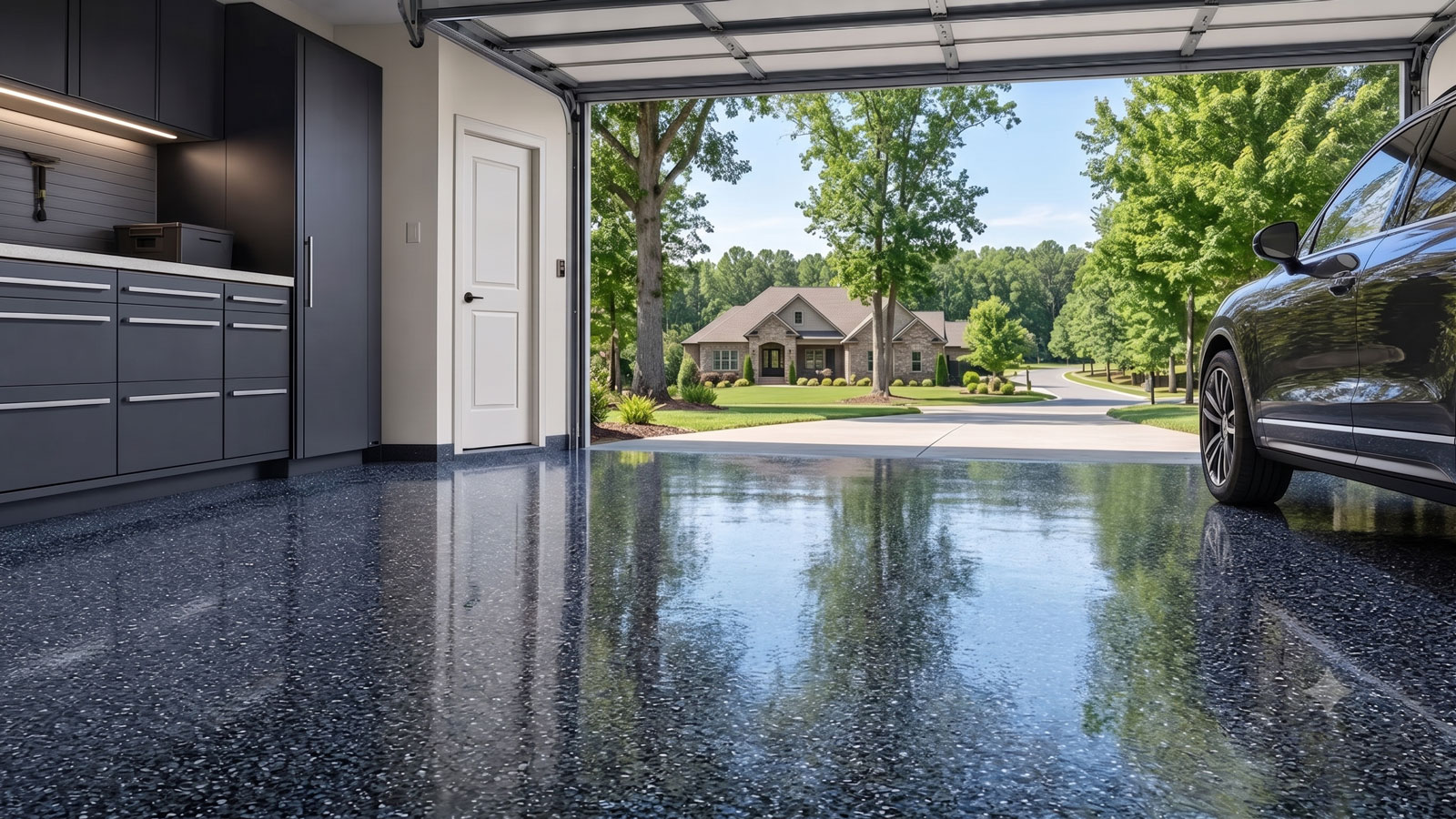
Garage Floor Coating in Columbus, OH
Floor Coating Services in Columbus, OH
Columbus garage floors span several development eras, from early urban neighborhoods and streetcar districts to postwar suburbs and newer outer growth. German Village, Clintonville, Olde Towne East and northwest Columbus can therefore present very different concrete histories. An older house may also have a garage that was rebuilt or repoured later, so house age alone is not enough to determine preparation.
The Scioto and Olentangy Rivers plus local creek systems create a complex drainage network, and some established neighborhoods still have aging underground infrastructure. That is useful context, but it does not mean every garage has a moisture problem. Driveway grade, threshold water, downspouts, persistent dampness and earlier coating failure are the more useful property-level evidence.
For coating work, established floors may need paint, oil staining, patches or mixed pours removed, while newer slabs can still carry curing compounds, sealers, builder repairs or smooth finishes. The project should separate those surface-preparation needs from any active drainage issue before the finish is selected. That distinction helps keep ordinary winter cleanup, surface preparation and active water entry from being treated as the same problem.
Local Market Insight
Columbus spans several generations of garage concrete, from older urban neighborhoods to postwar suburbs and newer outer growth. The practical coating question is not simply where the house sits, but what the slab has accumulated: old coatings, repairs, mixed pours, drainage history, winter residue, and current garage use.
What Affects the Cost of Garage Floor Coating in Columbus?
Columbus garages can begin with very different preparation needs because the city spans old urban neighborhoods, postwar suburbs and newer outer growth. Paint, patches, repours and oil staining may dominate one floor; builder sealers and curing products another. River or creek drainage, winter residue, garage geometry and edge work should be evaluated separately before a finish is selected.
Development-era slab history
Columbus was founded in 1812 near the Scioto and Olentangy Rivers, and its garage stock now spans early urban neighborhoods, streetcar-era districts, postwar suburbs, and large areas of newer metropolitan growth. German Village, Clintonville, Olde Towne East, and northwest Columbus can therefore present very different slab histories. The preparation should follow the actual slab generation rather than the age of the city name.
Creek, river, and stormwater context
The Scioto and Olentangy Rivers plus local creek systems give Columbus a complex drainage network. In established neighborhoods, some stormwater infrastructure is also old; current city projects include replacement of century-old water mains and drainage improvements in areas with recurring street and yard flooding. Property-level drainage evidence matters more than broad proximity to a waterway.
Existing coatings and construction treatments
Floor paint, DIY epoxy, clear sealer, curing compound, adhesive, and builder residue can all interfere with adhesion and may require full mechanical removal.
Cracks, joints, and mixed pours
Stable cracks, control joints, repours, utility cuts, chipped edges, and additions should be evaluated before full-surface grinding so repairs match the concrete condition.
Four-season vehicle residue
Central Ohio winters bring snowmelt, road salt, and freeze-thaw conditions, while humid summers and thunderstorms add wet-vehicle and runoff exposure.
Garage layout and return-to-service
Steps, stem walls, cabinets, storage alcoves, multiple bays, traction preference, and how quickly vehicles must return can change labor, materials, and system choice.
Call for a clear, project-specific estimate — or request one online.
Columbus garage floors reflect more than two centuries of neighborhood growth
The city grew outward from an 1812 river-centered core through multiple waves of residential development. That makes neighborhood age a useful clue, but it does not tell you when a specific garage was added, repoured, widened, or converted.
In neighborhoods such as German Village, Clintonville, Olde Towne East, and northwest Columbus, the house date is only a clue. Garages may have been added, widened, repoured, patched, or resurfaced years later, creating several concrete histories within the same neighborhood.
A Columbus estimate should identify those transitions directly—old coating edges, repairs, contamination, utility cuts, and surface treatments—before deciding how much grinding and repair work the floor needs.
Scioto, Olentangy, and aging drainage infrastructure make water history local
Columbus manages runoff through major river corridors and neighborhood stormwater systems, and some established areas are actively replacing old underground infrastructure. A garage should be judged by its own driveway, threshold, and slab evidence rather than by a broad citywide moisture assumption.
With the Scioto, Olentangy, and older neighborhood drainage systems in play, the useful evidence is at the property: threshold water, apron ponding, downspout discharge, slow-drying edges, efflorescence, or a repeated failure area.
If the garage remains dry through storms and snowmelt, the project can stay focused on preparation, traction, finish, and cure timing. If water repeatedly reaches the slab, the drainage path should be addressed separately from the coating. For Columbus homeowners, the key is to separate neighborhood history from the evidence on the floor itself. An old address may contain a much newer slab, while a newer garage may still have builder treatments that interfere with adhesion. The same logic applies to water: river and creek proximity can prompt useful questions, but actual threshold entry, dampness and previous coating failure determine whether drainage work belongs in the project. A useful Columbus quote should therefore separate three things that often get blended together: what is already on the concrete, whether repairs or repours created different slab sections, and whether water actually reaches the garage. That makes the scope easier to compare and avoids treating river proximity as a substitute for inspecting the floor.
Before coating a Columbus garage
- Does the slab appear original, added later, or made from multiple concrete pours?
- Is paint, sealer, curing compound, adhesive, or an old coating present?
- Are cracks, patches, pitting, chipped edges, or utility cuts visible?
- Does the driveway or surrounding grade send rain or snowmelt toward the door?
- Are water marks, mineral deposits, slow-drying areas, or previous coating failures present?
- Where do road salt, grit, wet tires, and seasonal debris normally collect?
- Is the garage primarily parking, household entry, storage, workshop, recreation, or mixed use?
Columbus Garage Floor Coating FAQs
Why can Columbus garage slabs vary so much by neighborhood?
Columbus grew through multiple development eras. An older urban garage may have additions, paint, patches, or several pours, while newer outer-area floors are more likely to have sealers, curing compounds, and builder repairs.
Do the Scioto or Olentangy Rivers automatically make a Columbus garage a moisture problem?
No. River and creek geography are context. Actual threshold water, persistent dampness, efflorescence, poor grading, or previous coating failure are the signs that matter at the property.
What should be checked on an older Columbus garage before coating?
Look for old paint or epoxy, oil contamination, repoured sections, cracks, patches, utility cuts, and changes in concrete texture that may require different preparation.
What can add cost on a newer Columbus garage?
Curing compounds, clear sealers, dense finishes, builder patching, large multi-bay layouts, and complex edge work can add preparation even when the slab looks clean.
How can house age and garage-slab age differ in Columbus?
An older Columbus house may have a garage that was added, rebuilt or repoured decades later. Construction joints, changes in concrete color, old coating edges and patch lines can reveal that history and help determine which areas need different grinding or repair.
Columbus Neighborhoods & Local Context
Phone Quote Line
Speak with a floor coating specialist about your project and get a realistic estimate range.
(380) 324-0500Typical Project Cost
$3,000–$5,500
Typical range for a two-car garage. Final pricing depends on floor size, concrete condition, prep work, coating type, and finish options.
Helpful Guides